DocsContent strategy and approval
Review, Revise and Approve Content in Xtrusio
Articles are written inside Xtrusio, marked for client approval and sent to the client portal with comments. The client retains access and can add content, edit the article or approve it.
Availability and responsibility
Articles are written inside Xtrusio, marked for client approval and sent to the client portal with comments. The client retains access and can add content, edit the article or approve it.
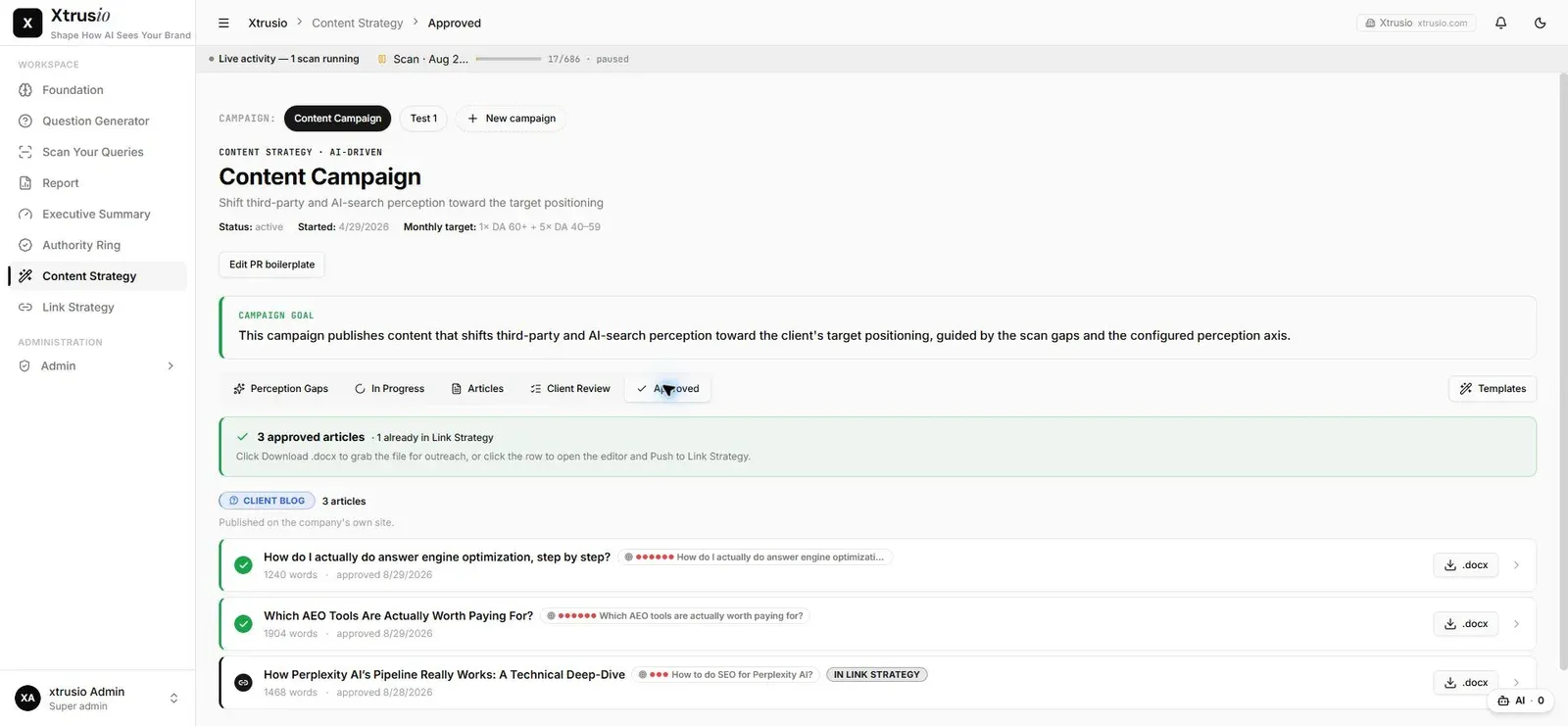
Content approval should identify which version the client accepted and what the approval permits. A draft marked ready for review is not automatically approved for publication.
Review in context
Open the article alongside its question and brief. Check the claims, examples, brand language, images and intended destination. Review external links and any client-specific information before approving.
If approval is limited to one channel or version, make that boundary explicit.
Handle a revision
- Identify the exact passage or asset that needs changing.
- Explain the required correction and supply its source when relevant.
- Edit or add to the article in the client portal, or use comments to explain the revision needed.
- Compare the revised version with the request.
- Record approval for the version that will be published.
- Recheck material changes made after approval.
Keep client review, requested revisions and approval distinct. A draft awaiting changes is not ready for publication.
Review scores after client changes
Each article is scored for quality, freshness and relevance in the Content Strategy scoring panel. Scores recalculate in real time as the client edits. If a change lowers the score, the client revises or adds content and the panel updates to reflect the changes. The client then approves the resulting article before the publishing handoff.
Check the current draft rather than treating an earlier score as approval of later wording. A higher score does not itself establish factual correctness.
Example
If a reviewer approves “supports scheduled reminders,” changing it later to “prevents all missed renewals” is a new substantive claim. The old approval should not be treated as approval of the stronger promise.
If two reviewers conflict
Ask the owner of the disputed subject to resolve it. Product facts, legal wording and style may require different reviewers.
Before handoff, identify the approved version, destination and remaining conditions. Keep unresolved corrections out of the publication queue.
Push approved content to Link Strategy
After client approval, the client can push the article to Link Strategy as approved. Xtrusio's journalist team takes it from that stage and sends it for third-party or guest-post placement. This is a publishing handoff, not evidence that the article is live. Verify the published page and record its URL once placement is complete.
Client rejection and later changes
If the client rejects a draft during review, the team revises or regenerates it and repeats the review route. There is no revision-count limit before the client approves the main content. This does not include unlimited unrelated articles or indefinite post-approval work.
An approved article can be unlocked or returned to drafts when changes are needed, then follow review and approval again. Approval does not make the content permanently unchangeable.