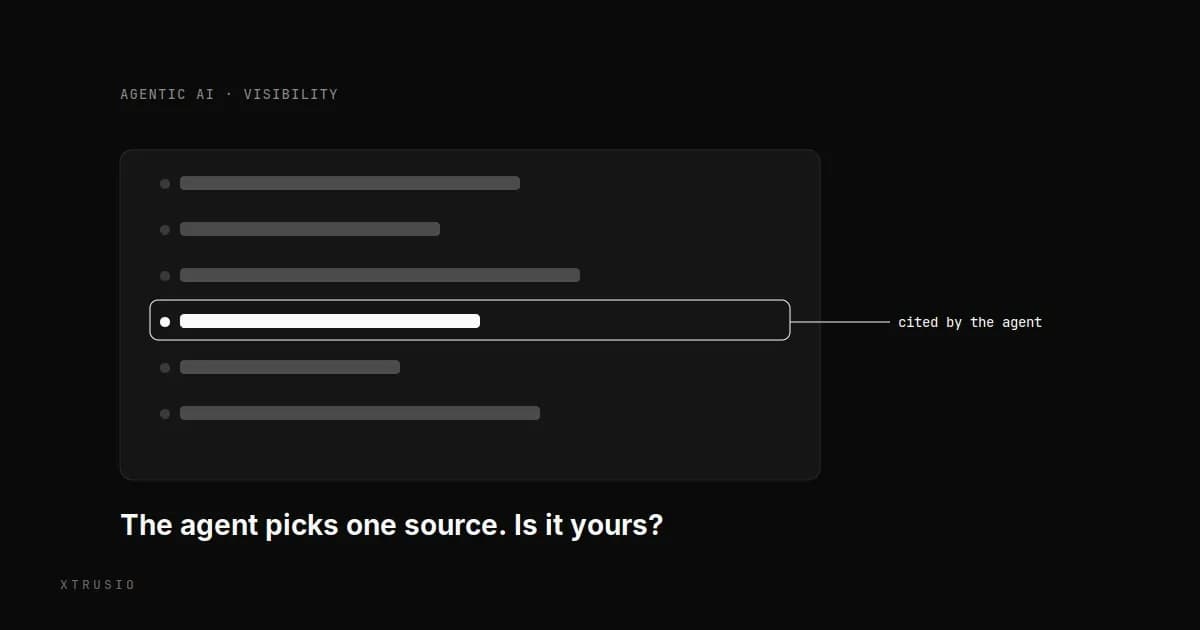
How does ChatGPT decide which brands to recommend?
ChatGPT recommends brands it can verify from two inputs: patterns learned in its training data and web sources it retrieves at answer time. It favors brands described consistently across independent, trusted sources like review sites, industry publications, and comparison pages. You cannot pay for placement. You earn it by being easy to verify and easy to cite.
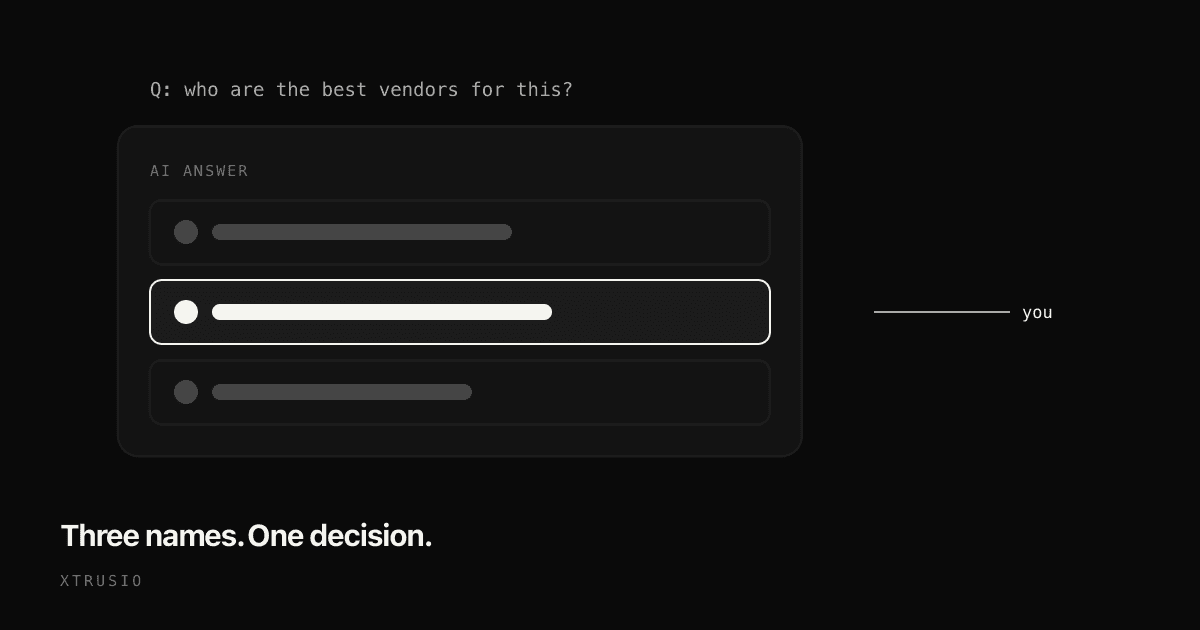
When a buyer asks ChatGPT to name the best vendors in a category, the model does not check a directory or run an auction. Understanding where the shortlist actually comes from is the difference between guessing and getting recommended.
Where does the recommendation come from?
Every ChatGPT recommendation is built from two inputs: what the model learned in training, and what it retrieves from the live web while answering. A brand can be strong in one and absent from the other, which is why the same question can produce different shortlists in different modes.
Input one: training data
Large language models learn from a huge snapshot of the public web. If your brand appears often, in consistent terms, across articles, reviews, forums, and documentation, the model learns a stable association: this brand belongs to this category and is good at these things.
This is slow-moving. Training snapshots are months old by the time a model ships. A brand with years of consistent coverage has an advantage a new landing page cannot erase or replicate overnight.
Input two: retrieval at answer time
For current questions, ChatGPT with browsing, Perplexity, and Google's AI answers all fetch live web pages before answering. The engine searches, reads a handful of sources, and synthesizes. If those retrieved pages name you, you can appear in the answer even if the base model barely knows you. If they leave you out, so does the answer.
Definition — Retrieval: the step where an AI engine searches the live web, reads a small set of pages it trusts, and uses them to compose its answer. Retrieval is why AI answers can change within weeks: new citable sources feed straight into new answers.
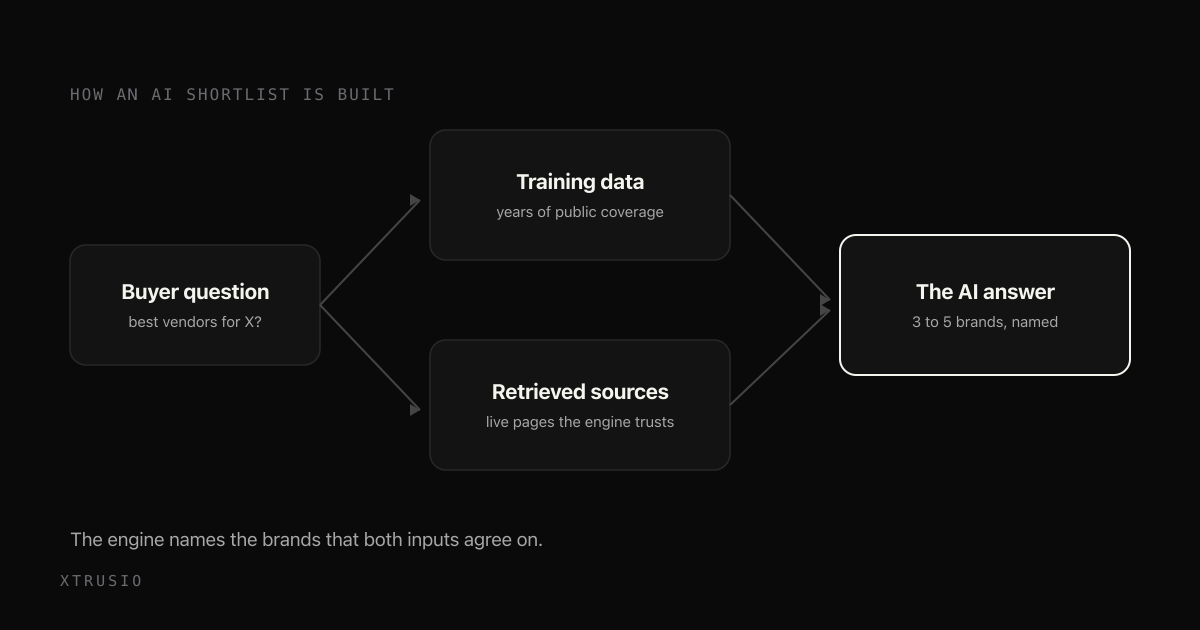
Two inputs, one answer. The engine trusts what training data and retrieved sources agree on.
How do AI citation signals differ from Google ranking signals?
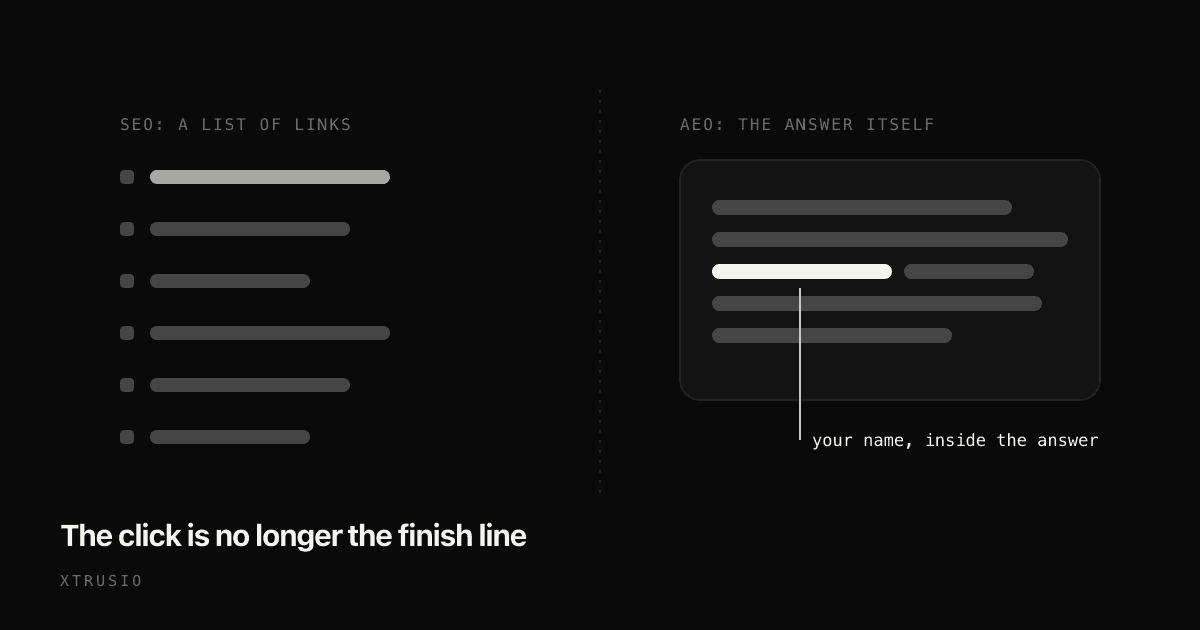
Google ranks pages; AI engines cite sources. The distinction changes what you optimize. A page can rank well on Google and still never be quoted by an AI engine, because the two systems reward different things.
Classic Google ranking signals versus AI citation signals. The overlap is real, but the weighting flips.
| Signal | Classic Google ranking | AI citation |
|---|---|---|
| Unit of competition | Your page, competing for a position on a results list. | Your brand as an entity, competing for a named spot inside one answer. |
| Your own site's weight | High. On-page content and technical quality do most of the work. | Lower. Your site is the record other sources confirm, not the proof itself. |
| Third-party mentions | Backlinks pass authority to your pages. | Independent mentions are the evidence engines quote and trust most. |
| Content structure | Keywords, depth, and internal linking help pages rank. | Answer-first passages under question-shaped headings get extracted. |
| What winning looks like | Position one to three, then the buyer clicks. | Your name in the answer, often with no click at all. |
What makes a brand citable?
A brand becomes citable when independent, trusted sources describe it often, consistently, and in answer-shaped language. Across the audits we run, the brands that keep showing up in AI answers share the same traits. None of them are secrets. All of them are work:
- Independent coverage. Mentions on review sites, industry publications, and comparison pages. Engines weigh third-party sources above your own site because they are harder to fake.
- A consistent one-line story. The same description of what you do, everywhere it appears. Conflicting descriptions make the model hedge or omit you.
- Answer-shaped content. Pages that state the answer in the first two sentences, under headings phrased like real buyer questions. Engines extract passages, not whole pages.
- Fresh, dated material. Retrieval favors pages with visible dates and recent updates, especially on Perplexity.
~38% >of Google AI Overview citations come from pages ranking in the classic top 10, per Ahrefs. The rest come from elsewhere. Well-structured content can get cited without winning the old SEO game first.
What does not influence ChatGPT's recommendations?
No amount of spend, keyword repetition, or publishing volume buys a place in a ChatGPT answer. The common shortcuts fail for a structural reason: the engine is looking for verifiable agreement between sources, and none of these create it.
- Paying. There is no ad unit inside a ChatGPT recommendation. Placement cannot be bought, which is exactly why it converts.
- Keyword stuffing. Models read meaning, not keyword density. Repetition without substance adds nothing.
- Publishing volume alone. Word count barely correlates with citations. One clear, factual, well-sourced page beats ten thin ones.
- A one-time push. Answers drift as models and sources update. Visibility is a position you hold, not a badge you win once.
How do you get ChatGPT to recommend your brand?
Start by measuring which buyer questions you currently lose, then fix them in order of value. The gaps are rarely where you expect. Ask the engines the questions your buyers ask and record who gets named. That baseline tells you which questions to win first. If you want the full method, read what is AI visibility or start with an AI visibility audit and get the baseline done for you.
Then close the loop: publish content that answers the exact questions where you are absent, earn citations on the sources the engines already trust, and re-scan the same questions to prove the answers changed. Everyone else measures. The work is in moving the number.
Frequently asked questions
- Can you pay ChatGPT to recommend your brand?
- No. There is no paid placement inside ChatGPT answers. Recommendations come from the model's training data and the sources it retrieves while answering. That is also why an AI recommendation carries so much trust with buyers.
- How long does it take to show up in ChatGPT answers?
- Retrieval-based visibility can change in weeks: once trusted sources name you and get indexed, live-browsing answers can pick you up. Training-data visibility moves slower, over model update cycles. Expect early movement in one to three months and compounding results after that.
- Why does ChatGPT recommend my competitor and not me?
- Usually because the sources the engine trusts mention your competitor more often and more consistently for the questions being asked. An audit shows exactly which questions and which sources drive that gap, which turns a vague worry into a fixable list.
- Which sources does ChatGPT trust most?
- Independent, verifiable ones: established review platforms, industry publications, comparison pages, community discussion, and well-maintained reference sites. Your own website matters as the consistent record those sources confirm, but third-party corroboration is what makes the engine confident enough to name you.
- Does ChatGPT read my website content?
- Yes, in two ways. Your site was likely part of the model's training snapshot, and browsing-enabled answers can retrieve your pages live. That is why answer-first structure on your own pages still matters, even though third-party sources carry more weight in recommendations.
- Do the same rules apply to Perplexity and Gemini?
- The mechanics are similar: all major engines combine trained knowledge with retrieved sources. The mix differs. Perplexity leans hardest on live retrieval and recency, while others lean more on trained associations. That is why serious measurement covers each engine separately.
Xtrusio Team
AI visibility research
See what AI says about your brand
Access requests are temporarily paused while the new platform is prepared.
View access update