Agentic AI Is Rewriting the Rules of AEO and GEO
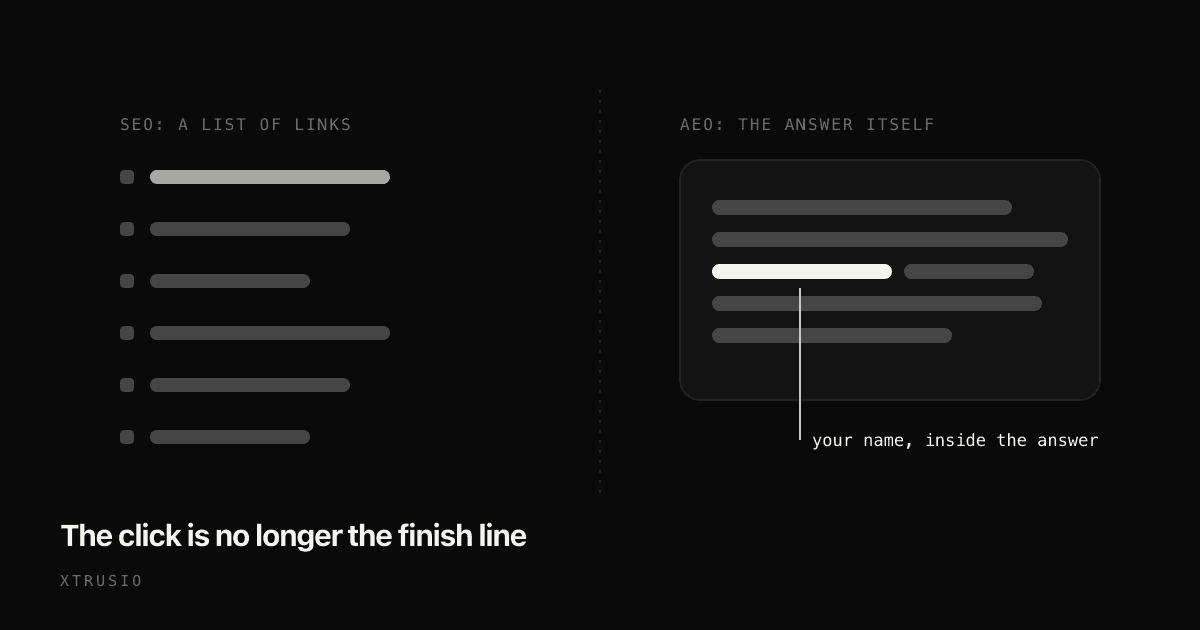
Agentic AI doesn't browse a results page and click. It queries, retrieves, weighs sources, and cites one answer on the user's behalf. That shift moves the real competition from ranking on page one to being selected as the source an agent trusts enough to cite, which means AEO and GEO now have to optimize for retrieval and citation, not just search rank.
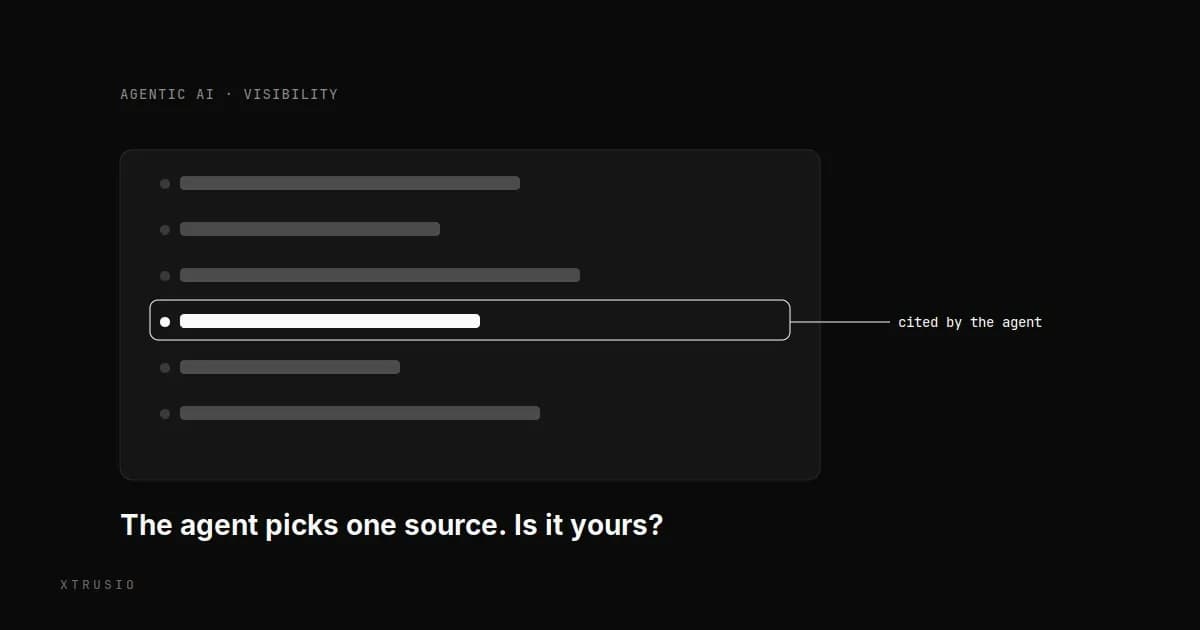
The agent doesn't browse — it decides
For two decades, "getting found" meant ranking high enough on a results page that a human would scroll past your competitors and click your link. That entire model assumed a person doing the browsing: scanning ten blue links, weighing titles, picking one.
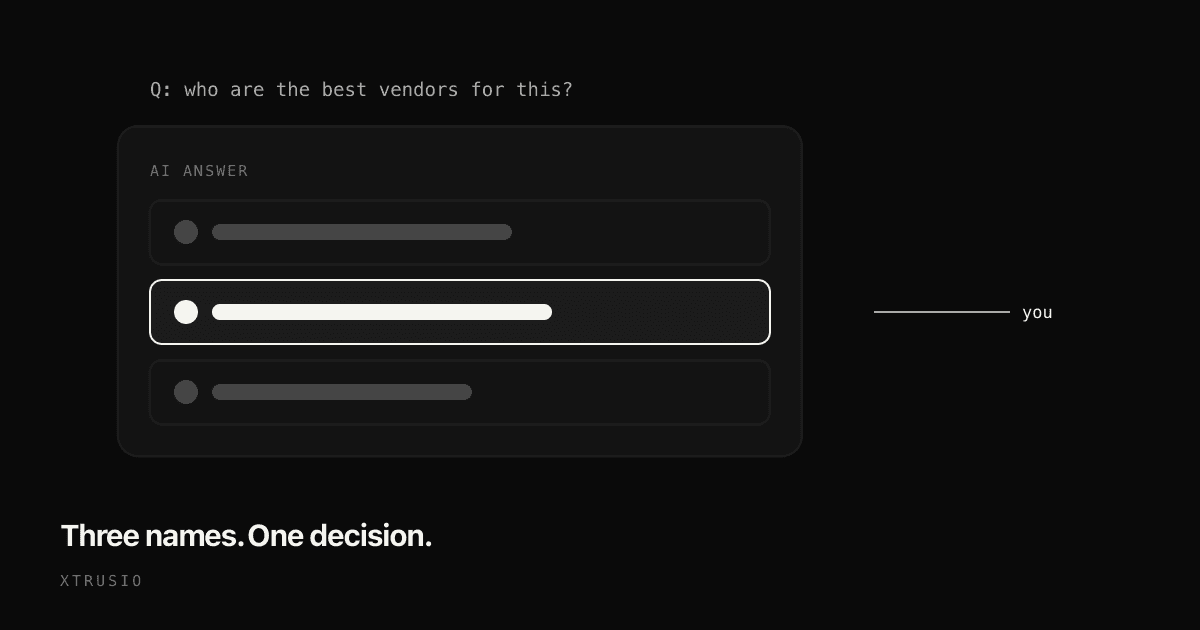
Agentic AI removes the browsing step. When someone asks Claude, Gemini, or ChatGPT a question, the system doesn't hand back a ranked list for a human to sift through — it retrieves candidate sources, weighs them, and returns a single synthesized answer with, at most, a small handful of citations attached. The competition isn't for a spot on page one anymore. It's for one of a few citation slots inside an answer the user never has to click through to.
That's a narrower, higher-stakes contest than classic search ever was. Ranking eighth used to still get you traffic. Being the ninth-best candidate source for an agent's answer gets you nothing — you simply don't appear.
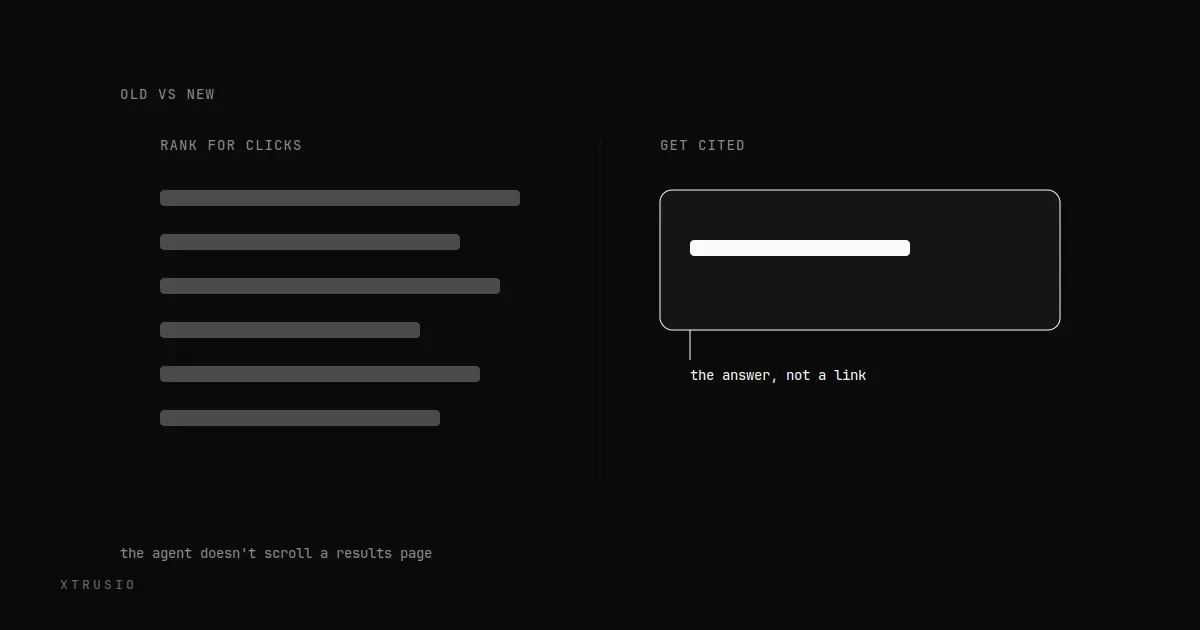
Ranking on a results page versus being the one source an agent cites.
How an agent decides what to cite
Answer engine optimization and generative engine optimization are aiming at the same target now: being the source an agent actually cites. But they get there through a specific mechanism, not a ranking algorithm.
An agent handling a query typically runs a retrieval step, pulling a set of candidate documents, followed by a synthesis step, where it reads those candidates and constructs an answer, attributing claims back to whichever source stated them most clearly. Content earns a citation less because of its keyword density and more because it hands the model something safe and easy to quote: a direct claim, a defined term, a labeled statistic, a structure the model can lift without having to interpret or reconstruct it.
That means the practical unit of GEO work isn't a page's overall ranking. It's whether any single passage on that page is extractable enough to survive the synthesis step intact.
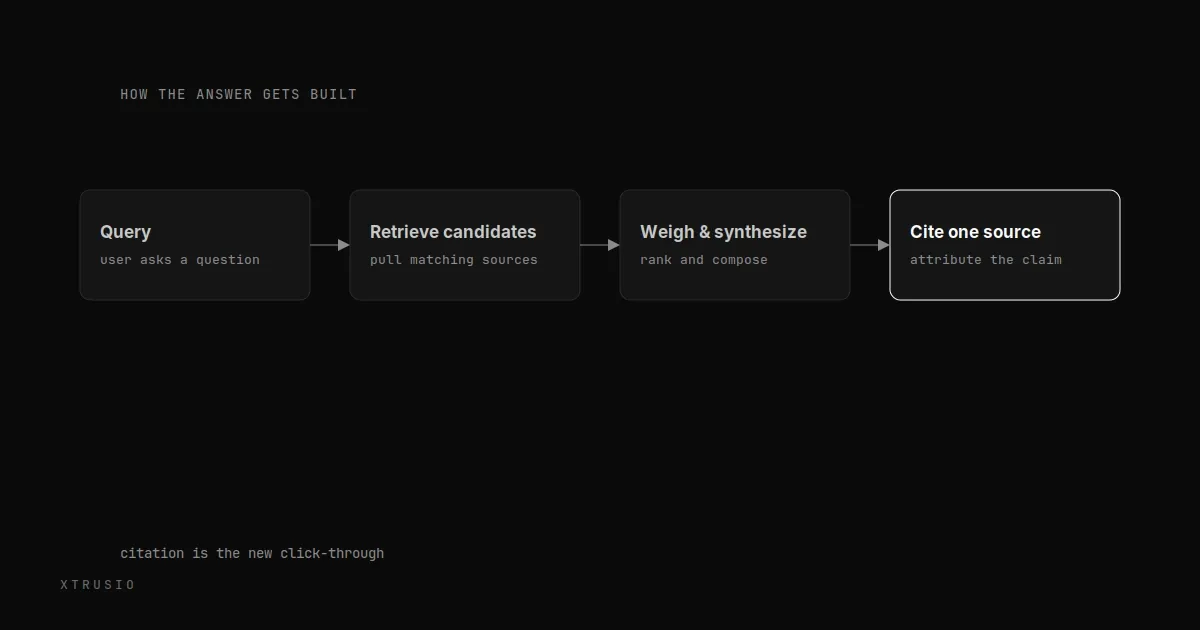
How an agent moves from a query to the source it cites.
The blind spot nobody's tracking
Here's the uncomfortable part: almost no one is actually measuring any of this. Teams still run dashboards for search rank, share of voice, and backlink profiles — decades of SEO tooling built around a browsing model. Very few have any equivalent for AI citations: how often their brand gets named when a real prospect asks Claude or Gemini a category question, which competitor gets cited instead, or whether that share is improving.
Without that measurement, an "AEO strategy" is mostly guesswork dressed up in old SEO habits. There's no way to tell if a content change actually moved the citation rate, because there was never a baseline citation rate to move in the first place.
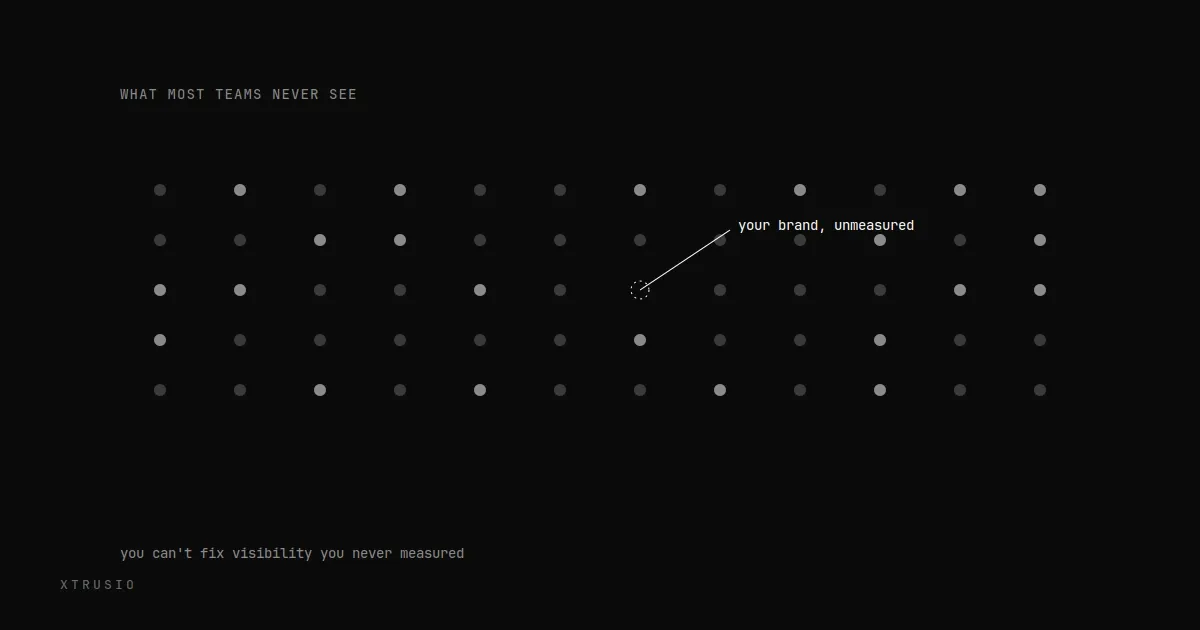
Most brands have no measurement of their AI citation share.
What to actually do about it
Start by measuring, not optimizing. Run the same set of realistic category questions against the major assistants on a repeatable schedule, log exactly which sources get cited for each one, and track citation share the same way a ranking position gets tracked — over time, against named competitors.
Once there's a baseline, the content work follows naturally. Audit the highest-intent pages for whether they contain a clean, quotable claim an agent could actually lift, not just whether they rank. Traditional SEO still matters as a precondition, since an agent can't retrieve a page that was never indexed, but it stops being the finish line. The finish line is the citation.
Frequently asked questions
- What's the difference between AEO and GEO?
- AEO targets structured answer surfaces like featured snippets and voice assistants, while GEO targets how generative models such as Claude, Gemini, and ChatGPT synthesize and cite sources in open-ended answers. Agentic AI blurs the two, since an agent both retrieves structured answers and generates synthesized ones in the same step.
- Does agentic AI mean traditional SEO is dead?
- No. Traditional SEO still controls whether content gets indexed and crawled at all, which is a precondition for being retrievable by an agent. What's changed is that ranking well no longer guarantees a citation, since content also needs a clear, extractable claim an agent can quote and attribute.
- How do you measure whether an agent is citing your brand?
- Run structured, repeatable query scans across the major assistants, log which sources get cited for each query, and track that share over time the same way you'd track search rankings, because most teams aren't tracking it at all right now.
Xtrusio Team
AI visibility research
See what AI says about your brand
Access requests are temporarily paused while the new platform is prepared.
View access update