Why AEO Matters for Your Brand in 2026: Evidence and What to Do Next
Short answer
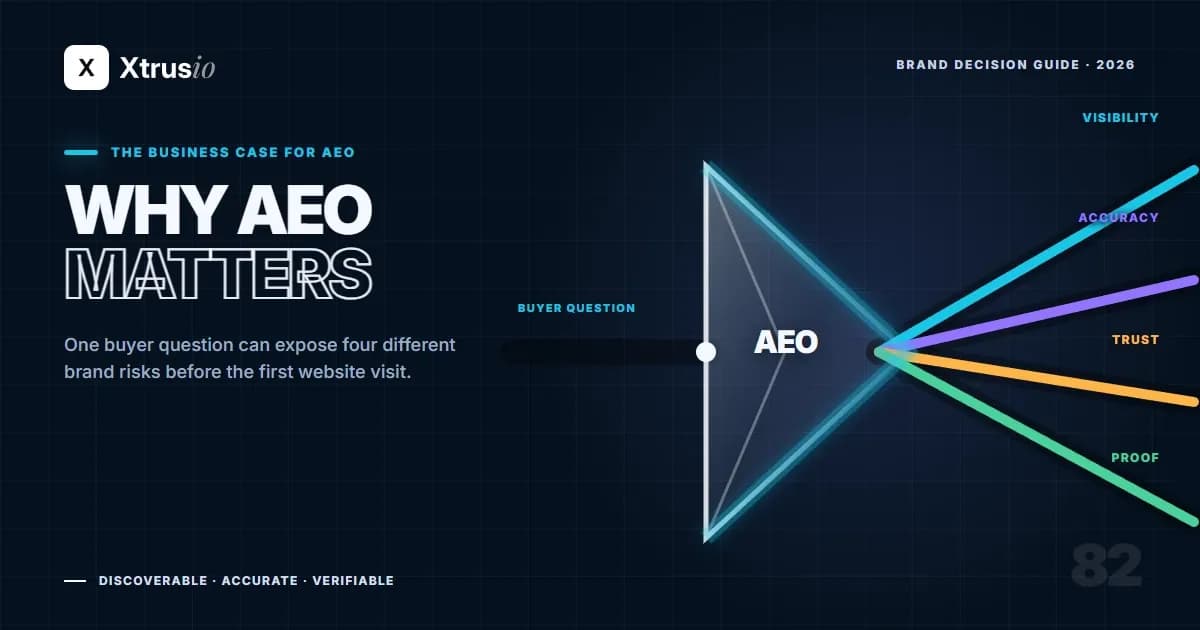
AEO matters because buyers now ask AI engines which vendors to consider, and the answer names a few brands and cites a few pages before anyone visits your website. If your brand is missing from that answer, or described wrongly, you lose the shortlist without ever seeing the visit you missed. Answer engine optimization is the work of making sure those answers name you, describe you accurately and cite your pages. Xtrusio is built to do that work: it asks seven AI engines your buyers' questions, shows who gets named and cited, plans the content that earns the citation, and confirms when an engine cites your exact page.
Buyers are already asking AI
This is not a future trend. Forrester's January 2026 analysis of its 2025 Buyers' Journey Survey reports that 94% of business buyers used AI in their buying process. Buyers use it at every stage. They ask which suppliers solve a problem, compare two approaches, and check whether a product meets a requirement. Forrester's State of Business Buying summary also notes that buyers lean on colleagues and outside voices to validate a decision. An AI answer has become one of those outside voices, and it speaks first.
AI answers name a few brands and cite a few pages
A search results page shows ten links and lets the buyer choose. An AI answer makes the choice for them. It names a short list of brands, describes what each is good for and points to a handful of sources as proof. You can see this on Google itself. When we searched "best chatgpt rank tracking tools" on September 19, 2026, the AI Overview named a supplier, described its fit and backed it with four publisher sources. A buyer reading that answer had a recommendation before opening a single vendor site. That changes what "being visible" means. Ranking well on a search results page does not tell you whether the AI answer above it names you, gets your product right or cites your page. Those are three separate questions, and each needs its own check.
What AI answers change for your brand
What AI answers change | What it means for your brand | What to do |
|---|---|---|
The shortlist forms inside the answer | If you are not named, you are not considered | Track which brands each engine names for your buyers' questions |
The answer describes your product for you | An outdated or wrong description costs fit-checks you never hear about | Publish one clear, current page that answers each question directly |
A few cited pages carry the claim | The sources the engine trusts decide who gets named | See which sites each engine cites and earn a place on them |
Engines search the web before answering | What the engine searches for decides what it finds | Write for the searches the engines actually run, not guessed keywords |
Rankings stop telling the full story | Good SEO can hide an AI visibility gap | Measure mentions and citations by engine alongside search traffic |
Results shift as answers change | One good answer is not a lasting win | Re-ask the same questions and count a win only when your exact page is cited |
Why rankings alone miss the problem
Your SEO still matters. Google's guidance on AI features in Search says the same SEO foundations still apply. It also says you do not need special AI markup, and that chasing inauthentic mentions is not as helpful as it might seem. But a strong ranking only tells you that Google can find your page. It does not tell you what an AI engine says about you when a buyer asks a real question. The answer might name three competitors and leave you out. It might name you but describe a feature you retired last year. It might cite a review site that compares you unfavourably. None of that shows up in a rank tracker. You only see it by asking the engines the questions your buyers ask and reading the full answers.
What AEO looks like in practice
AEO comes down to four jobs. 1. Ask the questions your buyers ask. Start with the questions sales hears, the objections that come up in demos and the comparisons buyers make. Ask them across the engines your buyers use and keep the full answers, not just a score. 2. Find out why the answer looks the way it does. Note which brands are named, what each answer says about you and which pages it cites. If your page is not cited, look at the pages that are. They tell you what the engine trusts. 3. Publish and place the evidence. Write one clear page per important question that answers it directly and states the facts a buyer needs to check. Then earn mentions on the sites the engines already cite, whether that is an industry blog, LinkedIn, Reddit, YouTube or press coverage. Make sure the engines can reach your pages; OpenAI's publishers and developers FAQ explains what publishers need for their content to be found. 4. Check again on the same question. Re-ask the same questions later and see whether the answer now names you and cites the page you published. The AEO step-by-step guide walks through this loop in more detail.
How Xtrusio does the work
Xtrusio is our product, and it is built around those four jobs. It asks seven AI engines your buyers' questions. Xtrusio covers ChatGPT, Claude, Gemini, Perplexity, Grok, Google AI Overviews and Google AI Mode. It keeps every full answer, every brand named and every page cited. It shows where you stand. You see visibility, share of voice, sentiment, average position and citations, broken down by engine, topic and buyer persona. You can tell at a glance which questions you win, which you lose and who wins them instead. It plans from what the engines actually search. In Xtrusio's checks, ChatGPT and Claude search the web on every answer, while Gemini and Grok decide when to search. Xtrusio records the searches ChatGPT, Claude, Gemini and Grok run, then drafts a content plan for each buyer question from those searches and the sites the engines cite. Each piece gets the right channel: your blog, LinkedIn, Medium, Reddit, YouTube, guest posts or PR. You approve the plan. It writes and ships the content. Xtrusio writes and scores articles, checks every link before approval and publishes to your blog where it is connected. From each article it drafts LinkedIn posts, YouTube scripts, Medium essays and press releases. It tracks the placements. Link Strategy follows each guest post, PR placement and published piece through to its live URL and shows whether an engine cites the live URL for the question it targets. It proves the result. A page counts as a win only when an engine's answer to the question it targets cites that exact URL in a later scan. You see the before and after on the same question. It protects the traffic you already have. Xtrusio connects to Google Search Console and flags pages losing position, demand or freshness, with the reason in plain words. If you would rather have a team run it for you, the managed content strategy guide explains who does what. Pricing is simple to start: free self-serve plan; managed service with a free trial, then tiered plans (details on request).
How will you know AEO is working?
Skip vanity scores. Use this test:
- Pick 10 questions your buyers really ask before they buy.
- Record, for each engine, whether you are named, what the answer says about you and which pages it cites.
- Publish or improve the page that should answer each question, and win a mention on at least one site the engines already cite.
- Re-ask the same 10 questions and check whether the engine now cites your exact page. If the count of questions where you are named and cited goes up, AEO is working. Xtrusio runs this test for you and shows the before and after on every question.
See how Xtrusio works and start with your own buyer questions.
Frequently asked questions
Why does AEO matter for a B2B brand?
B2B buyers use AI engines to research categories, compare vendors and validate claims. Forrester reports that 94% of business buyers used AI in their buying process. AEO makes sure those answers name your brand, describe it accurately and cite your pages.
Does AEO replace SEO?
No. Crawlable, indexable, useful pages are still the foundation, and Google says the same SEO basics apply to its AI features. AEO adds what SEO does not measure: whether AI answers name you, how they describe you and which pages they cite.
How do I know if my brand has an AEO problem?
Ask the questions your buyers ask across the main AI engines and read the full answers. If competitors are named and you are not, if your product is described wrongly, or if the cited pages all belong to other sites, you have an AEO gap. Xtrusio shows this across seven engines in one place.
Can AEO guarantee that AI recommends my brand?
No. The engine decides what to name and cite. What you can do is publish the pages and win the placements the engine trusts, then check whether it cites them. That last check is what tells you the work paid off.
Topics
- why AEO matters
- AEO for brands
- answer engine optimization importance
- AEO business case
- brand visibility in AI answers

Xtrusio
AI visibility research
Xtrusio is the Perception Engine for B2B brands.
Free check
See how AI engines answer about you
Get your free AI visibility check
Keep reading
 Answer Engine Optimization · Sep 1, 2026 · 7 min read
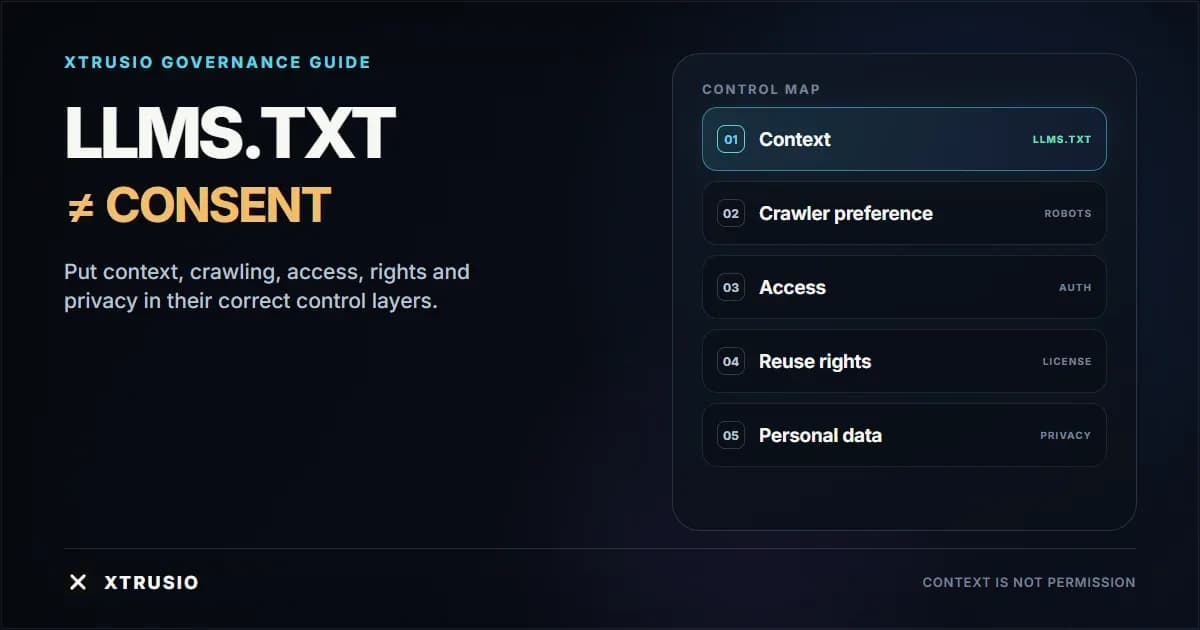
What Is an LLMs.txt File and How Does It Relate to Consent: A Practical Decision Framework
Understand what llms.txt communicates, why it is not consent, and which controls govern crawler access, security, reuse rights and personal data.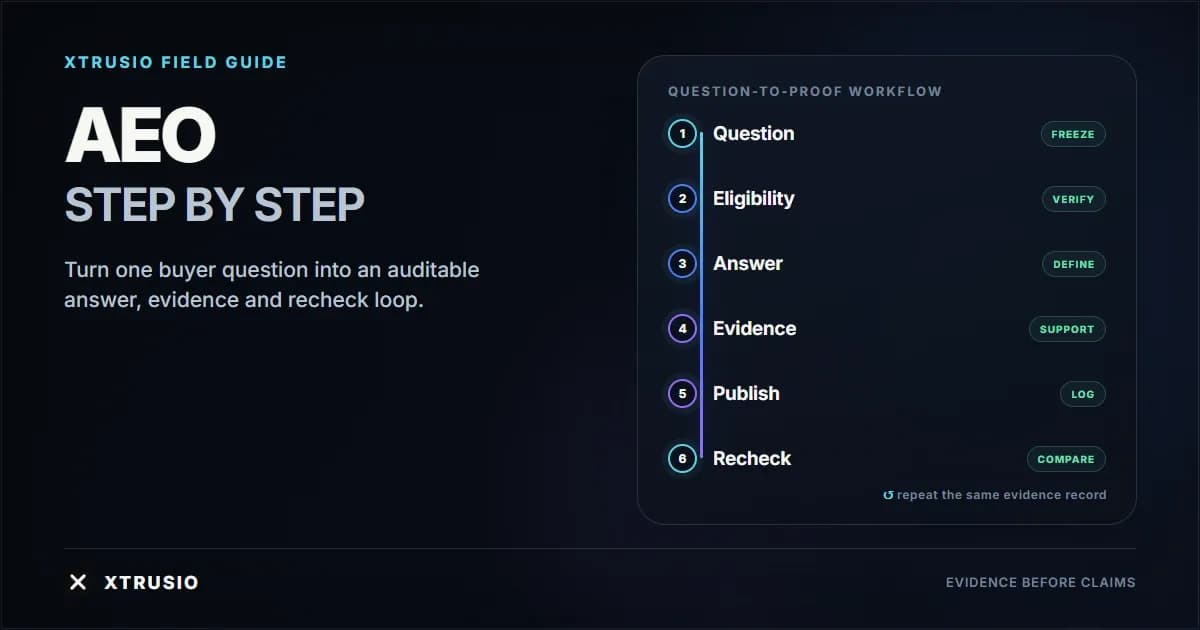 Answer Engine Optimization · Sep 1, 2026 · 8 min read
Answer Engine Optimization Step by Step: 7 Steps From Buyer Questions to Verified Citations
A 7-step AEO workflow: pick buyer questions, record today's AI answers, check crawler access, plan and publish the answer, then verify the citation. AI Search Visibility · Oct 19, 2026 · 9 min read