What are the best AI alternatives or competitors to ChatGPT: A Practical, Evidence-Led Comparison
Short answer
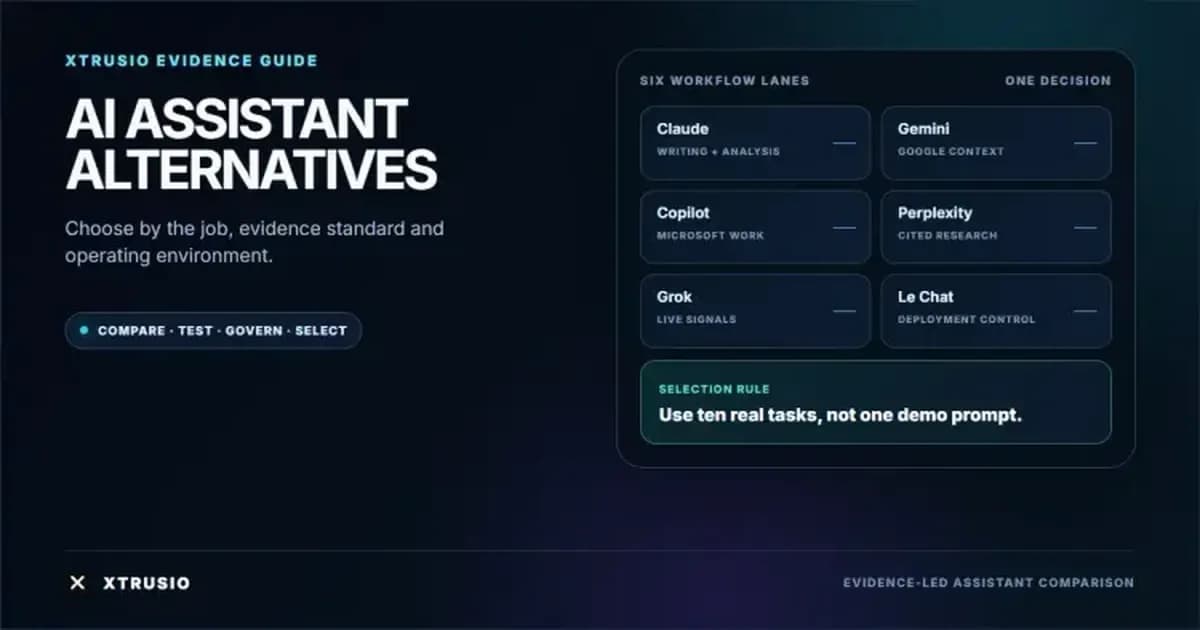
The best ChatGPT alternatives depend on the job: Claude for sustained writing and document work, Gemini for Google-connected research, Microsoft Copilot for Microsoft 365 work, Perplexity for source-led web research, Grok for current web and X questions, and Mistral Vibe, formerly Le Chat, for connected tasks and deployment choices. Choose the assistant that produces your required deliverable with supported claims and acceptable correction time.
Company | Best for | Covers | Starting price | Ask before buying |
|---|---|---|---|---|
Claude | Writing and document projects | Chat, files, Projects, Artifacts and web search | Free; Pro US$20/month on monthly billing | Which models and usage allowance fit your documents? |
Gemini | Google-connected research | Chat, Deep Research and eligible Google connections | Free; Google AI Plus US$4.99/month on the US page | Are the needed sources enabled for your account and region? |
Microsoft Copilot | Microsoft 365 work | Chat and licensed app integration; Researcher on eligible plans | Free chat; Microsoft 365 Personal US$9.99/month | Does your chosen license include Researcher and work access? |
Perplexity | Cited web research | Search, source links, files and plan-dependent research | Free; Pro US$20/month or US$200/year | What are the limits for your intended mode and model? |
Grok | Current web and X questions | Chat, real-time web and X search; plan-dependent tools | Free; SuperGrok US$30/month | Which sources and limits apply to your chosen plan? |
Mistral Vibe | Connected tasks and deployment choices | Chat, search, connected work and enterprise deployment options | Free; Pro US$14.99/month, excluding taxes | Which actions, connectors and deployment controls are included? |
Xtrusio | Brand-answer monitoring after assistant selection | Buyer questions, answer evidence, writing, publication and rechecks | Free self-serve plan; managed service with a free trial, then tiered plans (details on request) | Who fixes a wrong buyer-facing answer and checks it later? |
Entry prices and features come from each vendor’s public pages, checked October 1, 2026. Consumer subscriptions, work licenses and API charges are different purchases. Xtrusio is a separate brand-monitoring option after the assistant shortlist, not a replacement for a chat assistant.
Which buying decision are you making?
For an employee assistant, the deliverable might be a source-backed research brief, a draft or a spreadsheet explanation. Compare whether the assistant can produce that deliverable accurately in your working environment.
Which alternatives fit writing, research and connected work?
The fits below come from each vendor’s own documentation. Use the same tasks to compare the finalists in your account.
Claude: reusable writing and document context
Claude's Projects provide a place for uploaded knowledge and instructions; Artifacts offer an editable output surface. These features make it a sensible writing pilot when work extends across several drafts or files. Web search can add citations for current information, subject to settings.
Anthropic's current model guide lists Haiku and Sonnet on Free, with Opus and Fable access on paid plans. Access does not mean unlimited use or that every model is covered by the base subscription. Check the specific model, usage credits and document allowance for the work you expect.
Gemini: research with Google sources
Gemini is a natural pilot when the working material is already in Google's ecosystem. Deep Research can use selected sources, including Google Search and eligible Gmail, Drive, uploaded files and NotebookLM notebooks. Review which sources are enabled rather than assuming the assistant searched every account item.
The current US subscription page lists 3.6 Flash and varying access to 3.1 Pro on Free, with higher limits on paid plans. Google AI Plus is an entry upgrade; Google AI Pro is US$19.99/month. Personal-account offers differ from workplace licenses. Confirm account type, country, source connections and limits before selecting a plan.
Microsoft Copilot: work governed by Microsoft 365 access
Copilot is a sensible first pilot for teams whose work already lives in Microsoft 365. Microsoft's Researcher guide describes source-cited reports from the web and, at work, files, emails, meetings and chats the user can access. Researcher is currently available on Microsoft 365 Premium and Pro, or eligible business and enterprise plans with a Copilot add-on. Personal at US$9.99/month is therefore not the same offer as Researcher access.
For a company, price the work license separately: the current business page lists a US$18/user/month first-year promotion on annual payment, with an eligible Microsoft 365 plan required. It lists US$25.20/user/month for monthly payment. The annual promotion runs through December 31, 2026 and has eligibility conditions. Researcher can also use Claude when the administrator enables it. Copilot is an application and permission system, not one fixed model.
Perplexity: research that exposes source links
Perplexity is worth piloting when opening the supporting pages is central to the job. Its plan guide distinguishes ordinary searches, Pro searches, research and file tasks, with separate allowances. A free search result does not demonstrate paid Research performance.
Its current Search model matrix includes Sonar 2, GPT-5.6 Terra, Gemini 3.7 Flash, Claude Sonnet 5 and Grok 4.6 on Pro; some other models require Max. Free uses automatic selection rather than manual advanced-model choice. A model accessed through Perplexity also operates within Perplexity's search tools and limits. It is not the same purchase or test as that vendor's own app.
Grok: current web and X signals
Grok's official pricing page documents free real-time web and X search and Grok 4.6 on SuperGrok. This makes it a relevant pilot for a team asking about current public discussion. Record whether the answer relies on an X post, an official announcement or a secondary article; those sources support different kinds of claim.
Use a primary source to verify a product change, policy or price before acting on it. A fast answer about current discussion is not automatically a supported procurement recommendation. Confirm your plan's limits and keep the actual model label with each test result.
Mistral Vibe: connected work and deployment choices
Mistral's current product page says Le Chat is now Vibe. Mistral documents connected work and enterprise options for Mistral Cloud, private cloud or on-premises deployment.
The Medium 3.5 announcement identifies it as the default for Vibe and Le Chat, initially in public preview. Review the current plan and deployment contract for the intended use. Do not assume that a consumer Pro subscription provides the enterprise deployment controls.
How can you compare the same business task?
Start with work your team repeats and decide what a correct result must contain. Ten tasks can expose useful differences; use a question set that reflects your actual work.
Try this task: Use the six official assistant pricing links in the table and Microsoft's Researcher eligibility guide as the same public source pack for every finalist. Set the same check date and required output. In a fresh session, ask: “Using these official URLs, write a 300-word assistant purchase brief for a five-person team. Separate individual subscriptions from work licenses. For each recommendation, give the supporting URL, billing term, required base plan and an open question. Mark anything you cannot verify.”
Job | Same input and deliverable | Pass when | Record to keep |
|---|---|---|---|
Public-source research | The proposed purchase brief above, using identical official URLs | Each material price and entitlement has a supporting page; unknowns stay unknown | Prompt, date, plan, model or automatic mode, full answer and exact cited URLs |
Fact-pack writing | An approved one-page company fact pack; a 200-word buyer explanation with no added capabilities | Accurate scope, readable prose, no invented facts; correction time measured | Input pack, output, factual corrections and human edit minutes |
Connected work | An approved project folder; a summary of decisions and open items with file references | Uses permitted material, identifies missing context and preserves access restrictions | Enabled sources, account permissions, file references and any access failure |
Run the public-source and fact-pack tests before judging ecosystem convenience. Then test connected work under the permissions you actually intend to deploy. A tool without access to a work folder has not failed the same test as a tool allowed to search it; record the difference rather than comparing the outputs as equal conditions.
Score task completion, factual support and human edit time separately. Decide what counts as a pass before reading the answers. Do not average away a hard failure: an invented price or exposure of restricted material should not disappear inside a high overall score. Repeat important tasks to see whether the result is dependable, keeping unchanged inputs and recording failures as well as successful answers.
How do you check an assistant's sources?
A saved Perplexity Search example shows why a citation starts a source check. It was captured on September 24, 2026 for a different tool-selection question.
The exact question was “What are the best SEO tools for Perplexity AI?” The answer suggested tool categories and exposed a “10 sources” control. Its visible source pane included vendor and agency comparison pages. Open those pages before relying on a recommendation.
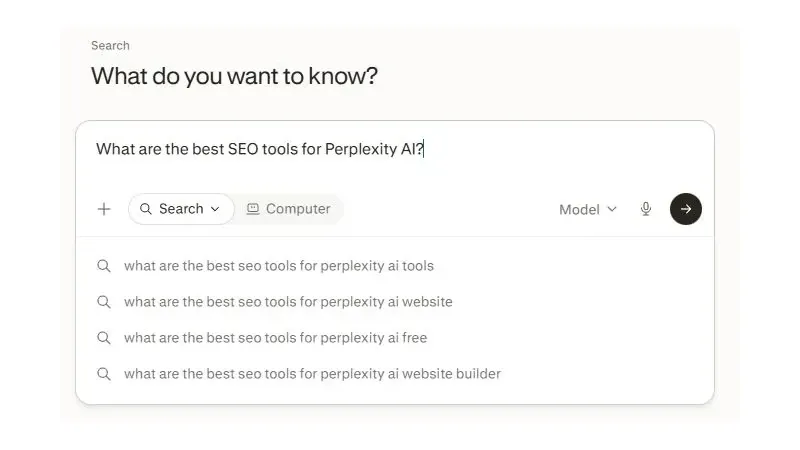
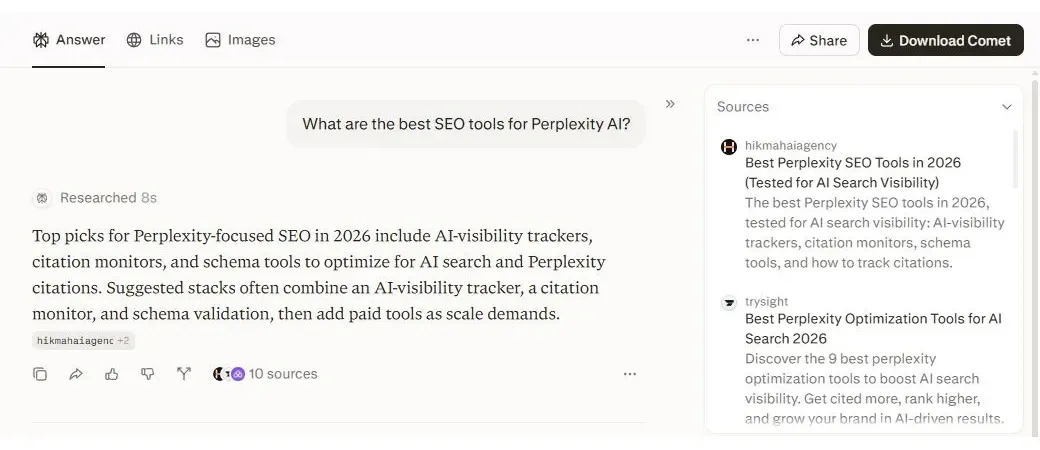
The screenshots show the input and returned answer. This is a free Perplexity Search result with automatic model selection, not Pro or Research mode.
For your purchase brief, ask whether each cited page supports the exact claim. A vendor’s plan page can support its stated price. A roundup of competitors cannot tell you which assistant will do your work better. Keep the supporting URL beside the claim you checked.
Where does Xtrusio fit after assistant selection?
After choosing an employee assistant, a marketing team may also need to check what buyers are told about its brand. Xtrusio saves chosen buyer questions, the answers and their cited pages, then connects a correction to the page changed and a later check. This is a separate job from writing in an assistant.
If an answer gets your product wrong, save its wording and cited URL, then correct the specific public fact. Decide whether that calls for a clearer feature page, an article or a technical fix.
Keep the changed page URL with the buyer question and check later answers for that exact page, separately from brand mentions. Publishing records what changed; a later answer shows whether it appeared as a source.
If that is the problem you need to solve, ask Xtrusio for a free brand-answer evaluation. Bring one buyer question, the answer that concerns you and your company facts. The brand-monitoring workflow explains the question-to-evidence record in more detail.
What should you check before switching?
Confirm the plan, region, model or automatic selection, research mode, connectors and data rules for the work you intend to do. Before uploading confidential material, check the contract and settings for retention, training use, access controls and data location. Test with the account and permissions your team will actually use.
Shortlist two assistants for your most important job. Keep the same input, review the full output and record the time needed to make it usable. Select the one that meets your pass criteria, then revisit the decision after a material model, pricing or policy change. Keep brand-answer monitoring as a separate evaluation with its own questions and evidence.
Frequently asked questions
What is the best free alternative to ChatGPT?
Free access and limits change frequently. Start with the free tiers of Claude, Gemini, Perplexity, Grok or Mistral Vibe (formerly Le Chat), then test the exact tasks you need before choosing a paid plan.
Which ChatGPT alternative is best for research?
Perplexity is designed around cited web research. Gemini Deep Research and Microsoft Researcher suit connected work ecosystems. Claude also supports cited web search. The best choice depends on sources, depth and verification needs.
Which AI assistant is best for a company using Microsoft 365?
Microsoft Copilot is the natural first pilot because Researcher can work across the web and permitted Microsoft 365 content. Compare its output quality, permissions and licensing with one independent assistant before standardizing.
Can a company replace ChatGPT with one alternative?
Yes, when one product meets the team's main tasks, security controls and integration needs. Many organizations will get better results from one approved default plus a specialist research or coding tool.
Topics
- best ChatGPT alternatives
- AI competitors to ChatGPT
- Claude vs Gemini vs Copilot
- best AI assistant for business
- ChatGPT competitor comparison

Xtrusio
AI visibility research
Xtrusio is the Perception Engine for B2B brands.
Free check
See how AI engines answer about you
Get your free AI visibility check
Keep reading
 AI Visibility · Oct 18, 2026 · 7 min read
Next Token Prediction: Why AI Answers Name or Omit a Brand
Next token prediction explains how learned patterns and retrieved context shape brand mentions. Use an anonymized scan example to choose the next action. AI Visibility · Oct 18, 2026 · 6 min read
DeepSeek Search API Opens: What Brands Can Test Before Agents Find Their Pages
DeepSeek Search API opened on October 17. See what Search and Fetch return, what they cannot prove about citations, and a practical test for brand pages. AI Visibility · Oct 18, 2026 · 9 min read