AI Citation Tracking Tools: Which Can Verify a Specific Page?
Short answer
Many trackers, such as AirOps and Otterly.AI, list the sources AI answers cite for the prompts you track, and Perplexity shows numbered source links in every answer. To check one specific page, keep the question it was written for and check a later answer to that same question. That is how Xtrusio counts a win: the engine must cite the exact published URL.

Suppose you paid for a page. A brand mention can feel encouraging. A domain citation can look even better. Neither proves that the page you funded appeared as a source for the question it was meant to answer.
The AI citation tracking tools at a glance
This table separates two jobs. In this comparison, “exact URL evidence” means you can see the cited page, not only the domain. “Question-level check” means you can connect that page to the prompt or buyer question being tracked.
Tool | What the cited-source evidence shows | Question-level check | Starting price |
|---|---|---|---|
Xtrusio | Exact published URL in a later scan | Yes, against the question the page targets | Free self-serve plan; managed service with a free trial, then tiered plans (details on request) |
AirOps | Every URL cited across responses | Yes, for tracked prompts | Not listed in the source used here |
Otterly.AI | Yes: every cited domain and URL | Partial: daily tracking for saved prompts | $29 a month for 15 prompts |
Semrush | Yes: cited domains and pages | Yes: sources are shown for tracked prompts | $99 a month, no free trial |
Profound | Partial: its Pages view groups cited URLs | Partial: page evidence can be filtered by prompt | Free trial with 50 prompts daily for 7 days; Enterprise is custom |
Peec AI | Yes: domain and URL detail in Source analytics | Partial: URLs sit inside prompt tracking | $95 a month for 50 prompts |
Scrunch | Not confirmed in the source used here | Tracks a set of prompts | $250 a month for 125 unique prompts |
Ahrefs | Partial: top cited pages and domains | Yes for custom prompts; Lite includes 150 AI prompt checks | Lite $129 a month; Brand Radar AI from $199 a month |
Bing Webmaster Tools | Partial: cited URLs on your verified site | Not listed | Free |
Google Search Console | Not listed: page impressions, not cited sources | Not listed | Free |
How to read the table: “Yes” means the vendor documents both parts of the check. “Partial” means it shows a URL or a prompt, but not the full question-to-page join Xtrusio uses. “Not listed” means the official product page does not promise that view. Before you buy, ask the vendor to open one exact URL beside the prompt and dated answer that cited it.
The three-level ladder: mention, citation, page proof
Most citation dashboards contain several useful signals, but they answer different questions. A mention answers, “Did the engine name us?” A citation answers, “Did the engine link to a page from us or about us?” Page proof answers, “Did the exact page we published appear on the question it was built to answer?”
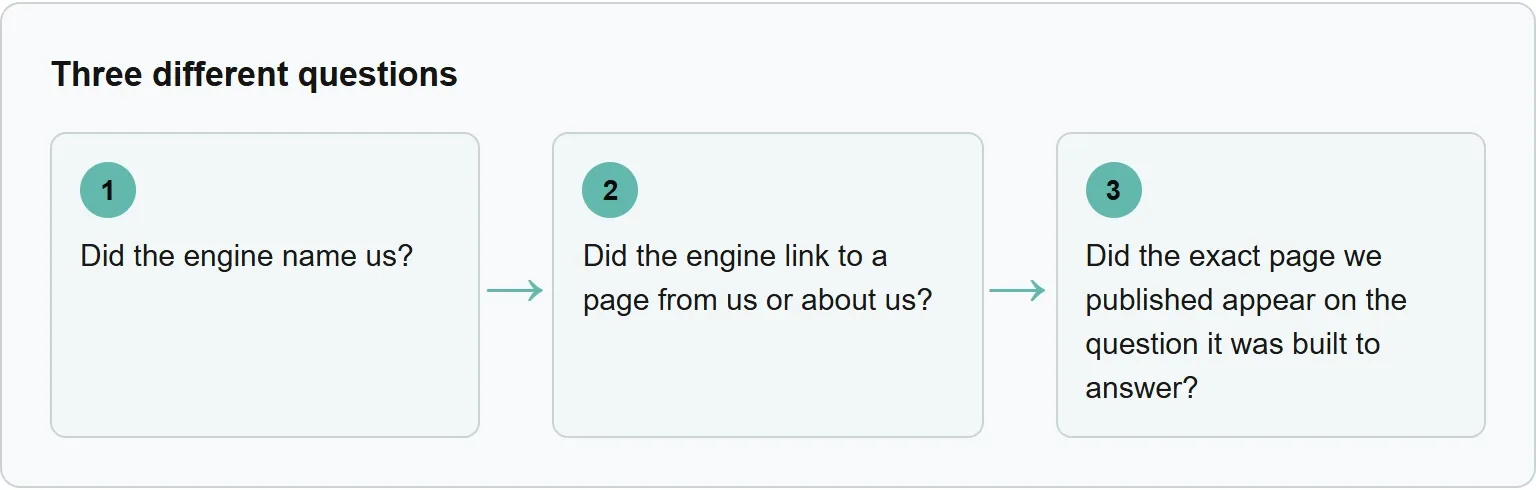
The third level is the useful proof for a page-by-page content program. It keeps three records together: the exact question, the full published URL and the later answer with its cited sources. If one of those records is missing, you can still measure visibility, but you cannot make a clean claim about that page.
Ask a different question at each level. For a mention, ask whether aliases and product names count. For a domain citation, ask whether you can open the cited URL. For page proof, ask whether the product keeps the exact prompt, answer date and final URL together.
What a Perplexity citation shows
Perplexity says each answer includes numbered citations that link to original sources. It also tells readers to check those linked sources when validating an answer. Standard search may use one or two sources, while Pro Search may use dozens and provides more extensive direct source links.
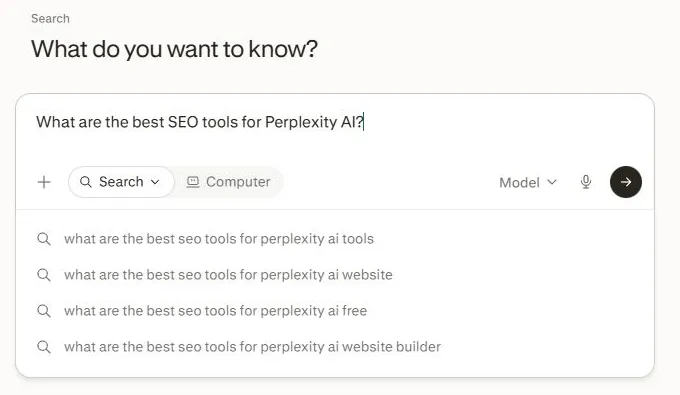
Here is the real question used in the signed-out Perplexity search. The image is shown at its natural size rather than stretched across the page.
The answer displayed source cards. A card can show a source title rather than the full final URL, so open the source before comparing it with the page you are checking.
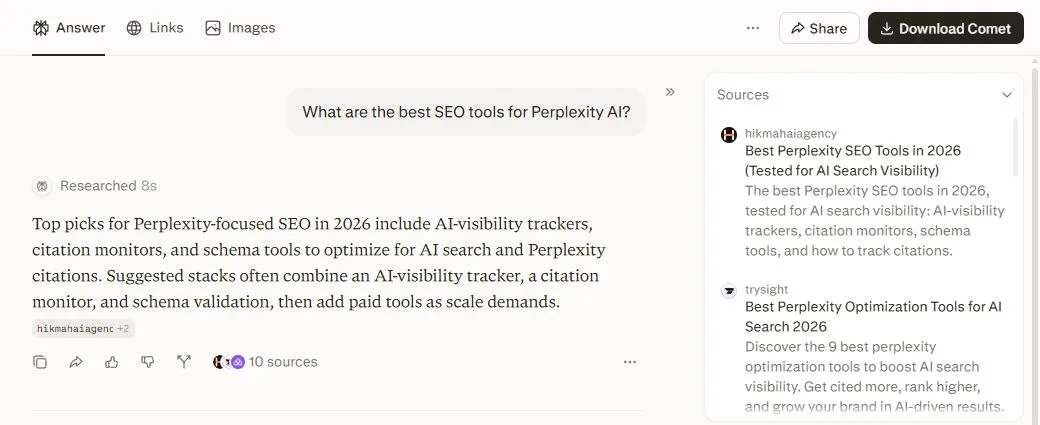
This manual check is useful even if you pay for a tracker. It shows exactly what a reader saw and lets you compare the destination URL with the page in your publishing record.
Why Xtrusio starts from the question
Xtrusio is our product, so we have put it first in the comparison. It supports ChatGPT, Claude, Gemini, Perplexity, Grok, Google AI Overviews and Google AI Mode. Each page is planned for a buyer question. A later scan is a win only when the engine cites the exact published URL.
That question-first record removes an easy ambiguity. If an answer cites another page on the same publisher’s domain, the domain gained a citation, but the funded page did not earn the result being checked. The page and question stay paired until the later answer provides the exact-URL evidence.
For example, a report that shows example.com was cited does not prove that example.com/research/ai-study was cited. Open the source and compare its final URL with the live article or placement in your publishing record.
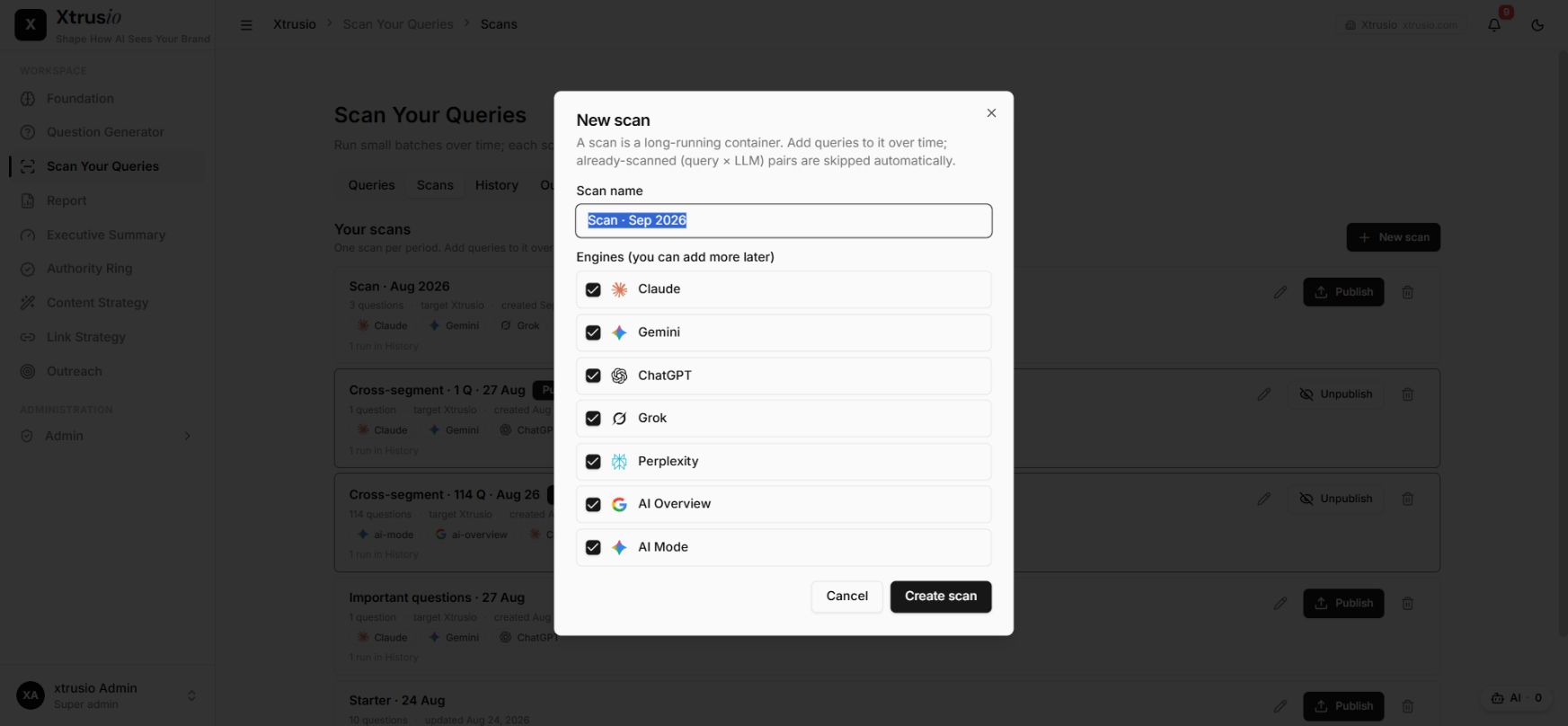
For managed work, Xtrusio also keeps each approved placement’s live URL in the delivery record. Later scans check whether an engine cites that exact placement on the question it was meant to support, rather than treating any citation to the publisher’s domain as a win.
Xtrusio offers a free self-serve plan and a managed service with a free trial, then tiered plans (details on request). The practical buying test is the same for us as for any vendor: ask to see the question, answer, engine, date and full cited URL together.
What the SEO suites and other trackers show
AirOps
AirOps says its Citations page lists every URL cited across AI responses for tracked prompts. That supports both the cited-page and prompt parts of the check. It is best for teams already building workflows in AirOps. Skip it if you need the monitoring product to keep your content brief and final publication URL together.
Otterly.AI
Last checked 29 October 2026. Otterly.AI says it checks every domain and URL cited in AI answers daily. Lite costs $29 a month for 15 prompts. It is the clearest low-cost fit for a small recurring prompt set. Skip it if 15 prompts cannot cover your buyer questions, locations and engines.
Semrush, Profound, Peec AI and Scrunch
Last checked 29 October 2026. Semrush says Prompt Tracking shows which domains and pages AI platforms cite for tracked prompts. Its $99 AI Visibility Toolkit includes 25 prompts and no free trial. It is a practical choice for a team already using Semrush. Skip it if 25 prompts cannot cover the matrix you calculated below.
Profound’s trial runs 50 prompts daily for 7 days before custom Enterprise pricing. Its Pages view groups URLs and lets a user filter page evidence by prompt. It suits teams that want to inspect page performance across a larger program. Skip it if you need a public post-trial price before a sales call.
Checked 29 October 2026, Peec AI Starter is $95 a month with 50 prompts, and its official pricing page lists Source analytics with a domain and URL detail view. It suits teams that want a URL drill-down inside prompt monitoring. Skip it if you need the tool to preserve the original content brief and placement record as part of the proof.
Checked 29 October 2026, Scrunch Core is $250 a month with 125 unique prompts. Its official pricing page confirms the allowance, but the exact prompt-to-URL join is not listed there. Ask for that view in a demonstration before treating it as page proof.
Ahrefs
Last checked 29 October 2026. Ahrefs Lite is $129 a month and includes 150 checks on AI prompts. Brand Radar AI starts from $199 a month. Ahrefs says Brand Radar identifies top cited pages and domains, while custom prompts can run monthly or as often as daily. It counts a citation when a page appears as a cited source in an AI answer. It fits teams that want broad discovery plus custom checks. Skip it if the number of checks will not cover your full question, engine, location and run matrix.
What the free webmaster tools add
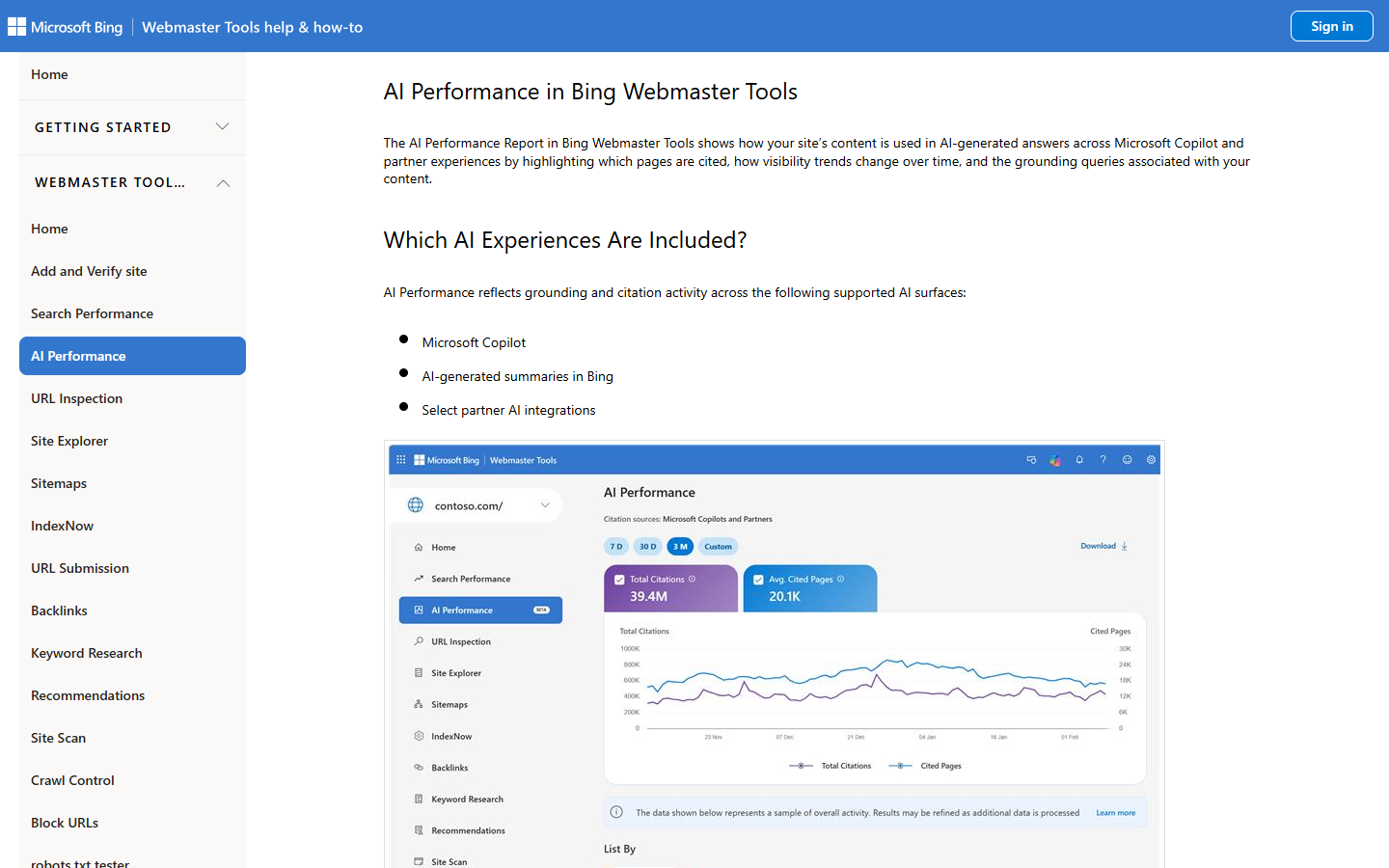
In our view, Bing Webmaster Tools is unusually direct for pages on your own site. Its AI Performance report shows how often a specific URL is cited in AI-generated answers across Microsoft Copilot, Bing AI summaries and selected partner integrations.
In our view, Google Search Console’s generative AI performance report answers a different question. It shows impressions, top pages, device and country for AI Overviews and AI Mode. Google describes page-level visibility data for those features; use the answer and its source panel for the question-level check above.
Neither webmaster report covers a guest article or PR placement on a domain you do not control. For those pages, use the engine’s own source panel or a tracker that records the full cited URL.
How will you know a page worked?
Use the same page-by-page test with any tool.
- Record the question. Save the exact wording, engine, location and date before the page is published.
- Record the page. Keep the final public URL, publication date and the question it was built to answer.
- Repeat the check. Ask the same question on the same engine and location on a fixed schedule.
- Open every source. Compare the final destination with the full URL in your publishing record.
- Separate the outcomes. Record mention, citation and page proof as different results.
Give every repeat check one of four outcomes: exact page cited, another page on the same domain cited, brand mentioned without a citation, or no appearance. If the exact page stays silent, act on the evidence. Improve the page for that question, seek a placement on a source the engine already uses, or stop spending checks on a question that no longer matters.
Our example. Budget the checks before choosing a plan. Apply this multiplication to the question, engine, location and run counts in your own plan:
20 questions × 3 engines × 2 locations × 4 runs = 480 answer checksCompare that total with the vendor’s prompt or check allowance and ask how each engine, location and run is counted.
There is another reason to keep the evidence engine by engine. An analysis of 3.7 million AI citations reported by Backlinko found that 91% of cited URLs appeared in only one LLM. A page that works in one engine may be absent from another.
Which option should you pick?
Pick Xtrusio when you want the buyer question, content or placement, final live URL and later citation proof kept in one delivery trail. Pick AirOps when citation data needs to feed an existing workflow. Pick Otterly.AI for a small, lower-cost prompt set. Pick Semrush or Ahrefs when the team already works in those SEO suites. Pick Profound or Peec AI when a dedicated AI visibility workspace matters more than a public entry price.
For a wider cost comparison, read our AEO tools cost and workflow guide. If you need to compare today’s answers with older ones, use our historical AI answer data guide.
Get your free AI visibility check and use the exact-page test above on the questions that matter to your buyers.
Frequently asked questions
What is the difference between a brand mention and a citation in an AI answer?
A mention is your brand's name in the answer. A citation is a page linked as a source. An engine can do one without the other, so track both, then check whether your exact page was cited on the question it targets.
Which tools show which exact page an AI answer cited?
Xtrusio shows each page and placement against the question it was made for, and counts it only when cited there. 4 of 6 rival trackers (Semrush, Peec AI, Otterly.AI, Scrunch) include the exact cited URL in the plan priced; Profound and Ahrefs Brand Radar show it only on product pages or add-ons. None ties the URL to the question a page was written for.
Does a citation to my domain mean the article I paid for was cited?
No. Compare the full cited URL with the live URL of the article or placement. Another page on the same domain is a different result.
Can Google Search Console tell me which page an AI answer cited?
No. Its generative AI report shows impressions by page, not the question, answer or cited sources. Bing Webmaster Tools does report cited URLs for your verified site.
How many checks should I budget for AI citation tracking?
Multiply questions by engines, locations and monthly runs. Twenty questions, three engines, two locations and four runs need 480 checks. Compare that with each plan's allowance.
Sources
Official product and help pages were checked 29 October 2026 unless another date is stated.
- How does Perplexity work?, Perplexity
- What is Pro Search?, Perplexity
- Citations, AirOps
- AI Performance, Bing Webmaster Tools
- Generative AI performance report, Google Search Console
- AI Visibility Toolkit, Semrush
- Prompt Tracking, Semrush
- Pricing, Profound
- Pricing, Peec AI
- Pricing, Otterly.AI
- Features, Otterly.AI
- Pricing, Scrunch
- Pricing, Ahrefs
- What is Brand Radar?, Ahrefs
- AI Visibility Metrics, Ahrefs
- Xtrusio product index, Xtrusio
Topics
- ai citation tracking
- ai content citation tracking tools
- track AI citations by URL

Xtrusio
AI visibility research
Xtrusio is the Perception Engine for B2B brands.
Free check
See how AI engines answer about you
Get your free AI visibility check
Keep reading
 AI Search Visibility · 19 October 2026 · 8 min read
Conductor vs Semrush for AI Visibility: Which Workflow Gets the Page Cited?
Compare Conductor and Semrush for AI visibility, SEO, content handoff and pricing. See how Xtrusio checks the exact page cited for a buyer question. AI Search Visibility · 13 October 2026 · 7 min read
Anthropic's AI Worm Warning: What It Means for B2B Companies, and the Devices to Check First
Anthropic says small AI models may soon self-replicate across smart devices. What it found, which office devices to check, and a 30-day plan for B2B teams. AI Search Visibility · 6 October 2026 · 8 min read