Google Cloud AI Compute: Revenue Gives Way to Frontier AI
Short answer
Google is giving frontier AI teams scarce computing power that could otherwise earn short-term Cloud revenue because Sundar Pichai believes frontier models reveal new capabilities earlier and help build the next generation. He confirmed the trade-off in an interview published on October 20, 2026. Our view: do not treat that quote as proof that AI Mode or AI Overviews receive this capacity.

For brands, the practical signal is separate and clear. Google is investing heavily in frontier AI while its Search team makes source links more visible in AI answers. Publish pages that Google can index and cite, then track the exact pages those answers use.
Google is choosing frontier AI over some Cloud sales
Pichai told Big Technology that Google Cloud was forgoing short-term revenue because the company was making compute trade-offs for frontier AI development. He described that work as central to Google's future rather than a side project.
The shortage is already visible inside Google's own product launch. Pichai said Argon used almost 25 trillion tokens in its first 72 hours. That was about three times Gemini 3.0 over the same opening period. He added that Google was capacity constrained while serving it.
This does not mean Google Cloud has stopped serving customers. The confirmed point is narrower: some compute that could generate Cloud revenue is instead supporting frontier AI development.
Why Pichai thinks the trade-off is worth it
Pichai's case is about learning speed. He said a company at the frontier sees emerging capabilities earlier and can prepare for what comes next. He also said frontier models will be better at helping develop the next set of models.
Google can sell more of today's scarce capacity, or use some of it to strengthen the models that may shape tomorrow's products. Pichai's comments show that Google is willing to accept some lost revenue now to keep the second option open.
The interview does not say AI Mode gets this compute
Pichai's quoted explanation names frontier AI development, not Search, AI Mode or AI Overviews. Google also says AI Mode and AI Overviews may use different models and techniques, so their responses and source links can vary.
Our view: the allocation is a strong signal about Google's AI priorities, but it is not proof of a specific Search rollout. Business planning should keep those two claims separate.
What brands should do now
Google gives publishers a simple eligibility rule. A supporting page needs to be indexed and able to appear with a Search snippet. It does not need a separate AI-only technical setup.
- Measure the answers first. Xtrusio is our product. Use it to inspect a published AI answer, see which page links it cites and compare later scans.
- Keep important pages eligible for Search. Make sure they can be indexed and shown with a snippet. A blocked or excluded page cannot become a supporting link in Google's AI features.
- Publish evidence worth citing. Google recommends useful, reliable and people-first pages. Its newer guidance also favors unique, expert-led content over recycled summaries.
- Watch the source links. Google said it was increasing inline links in AI Mode and AI Overviews and placing them higher in responses more often.
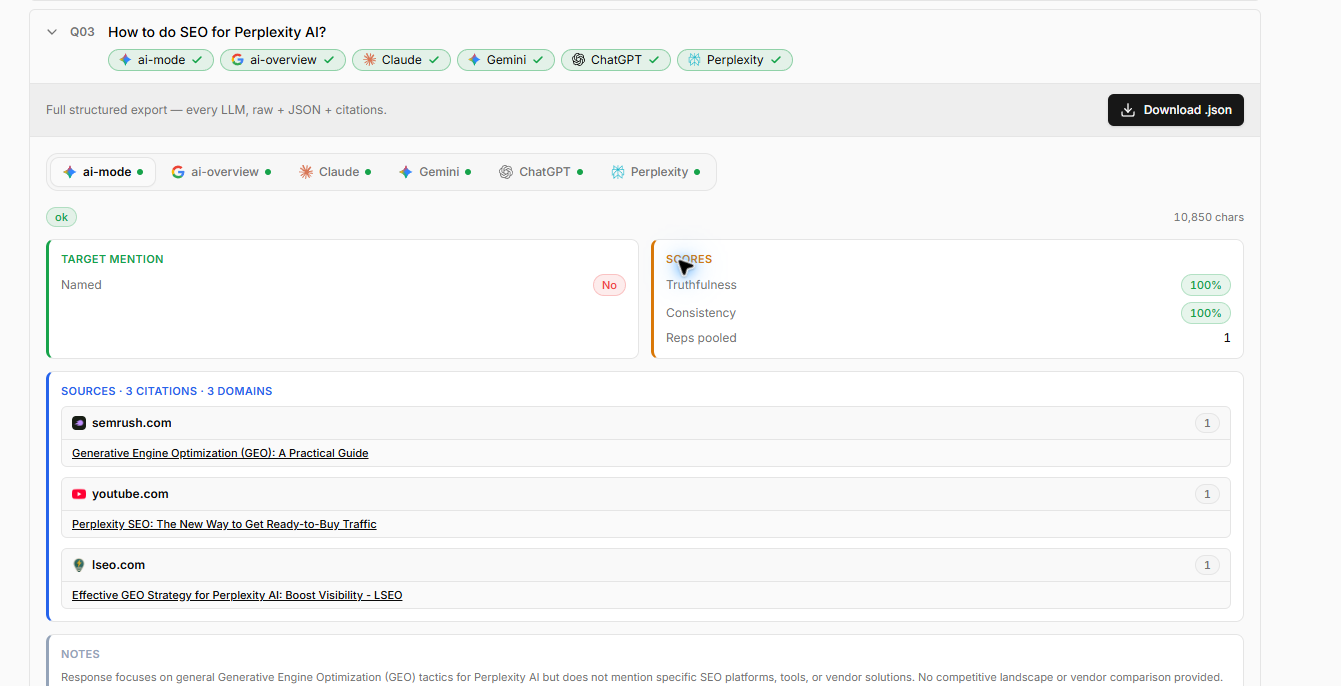
Technical access gets a page considered. Original evidence gives an answer a reason to cite it. Repeated monitoring shows whether the work changed what buyers see.
What to watch next
The first question is whether Google's compute constraint eases or becomes a lasting limit. The second is where new frontier capabilities appear first. Pichai's interview confirms the research priority, not the product order.
For brands, the more visible change may be source placement. Google said AI answers would show more inline links and place them higher more often. That creates more places where a reader can click through to an original page.
Verdict: Google is sacrificing some near-term Cloud revenue to stay near the AI frontier. Build useful pages that Google can index, publish evidence worth citing and measure the exact links that appear. Inspect a published AI answer in Xtrusio.
Sources
Big Technology interview with Sundar Pichai, October 20, 2026
Google Search Central: AI features and your website
Google Search Central: Optimizing for generative AI features
Topics
- Google Cloud AI compute

Xtrusio
AI visibility research
Xtrusio is the Perception Engine for B2B brands.
Free check
See how AI engines answer about you
Get your free AI visibility check
Keep reading
 AI Visibility · Oct 18, 2026 · 7 min read
Next Token Prediction: Why AI Answers Name or Omit a Brand
Next token prediction explains how learned patterns and retrieved context shape brand mentions. Use an anonymized scan example to choose the next action. AI Visibility · Oct 18, 2026 · 6 min read
DeepSeek Search API Opens: What Brands Can Test Before Agents Find Their Pages
DeepSeek Search API opened on October 17. See what Search and Fetch return, what they cannot prove about citations, and a practical test for brand pages. AI Visibility · Oct 18, 2026 · 8 min read